 Camel trek
 and nomad school, 3 days
Dunes, two camps and a respectful visit to a nomad school, with camels carrying the kit. From €250.
Leave the Foum Zguid palm grove on foot beside a loaded caravan, sleep twice in the desert and finish on the shore of Lake Iriki. From €230 per person.
from€230per person
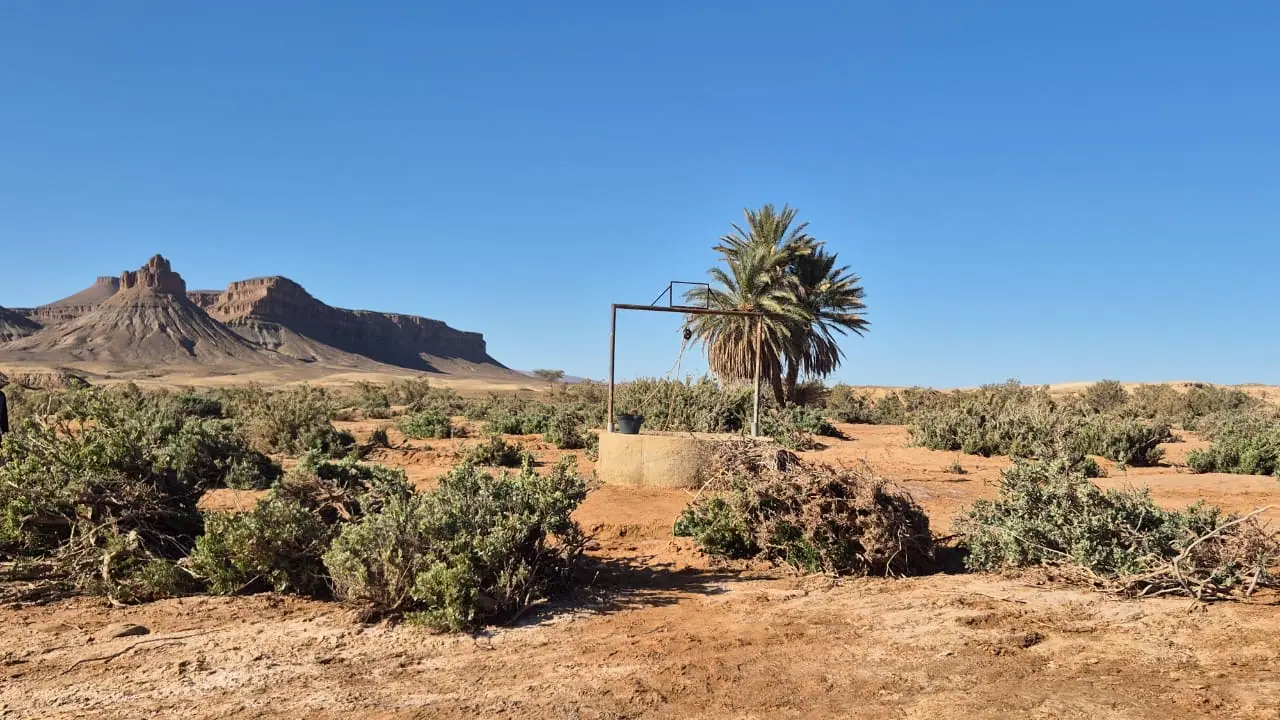
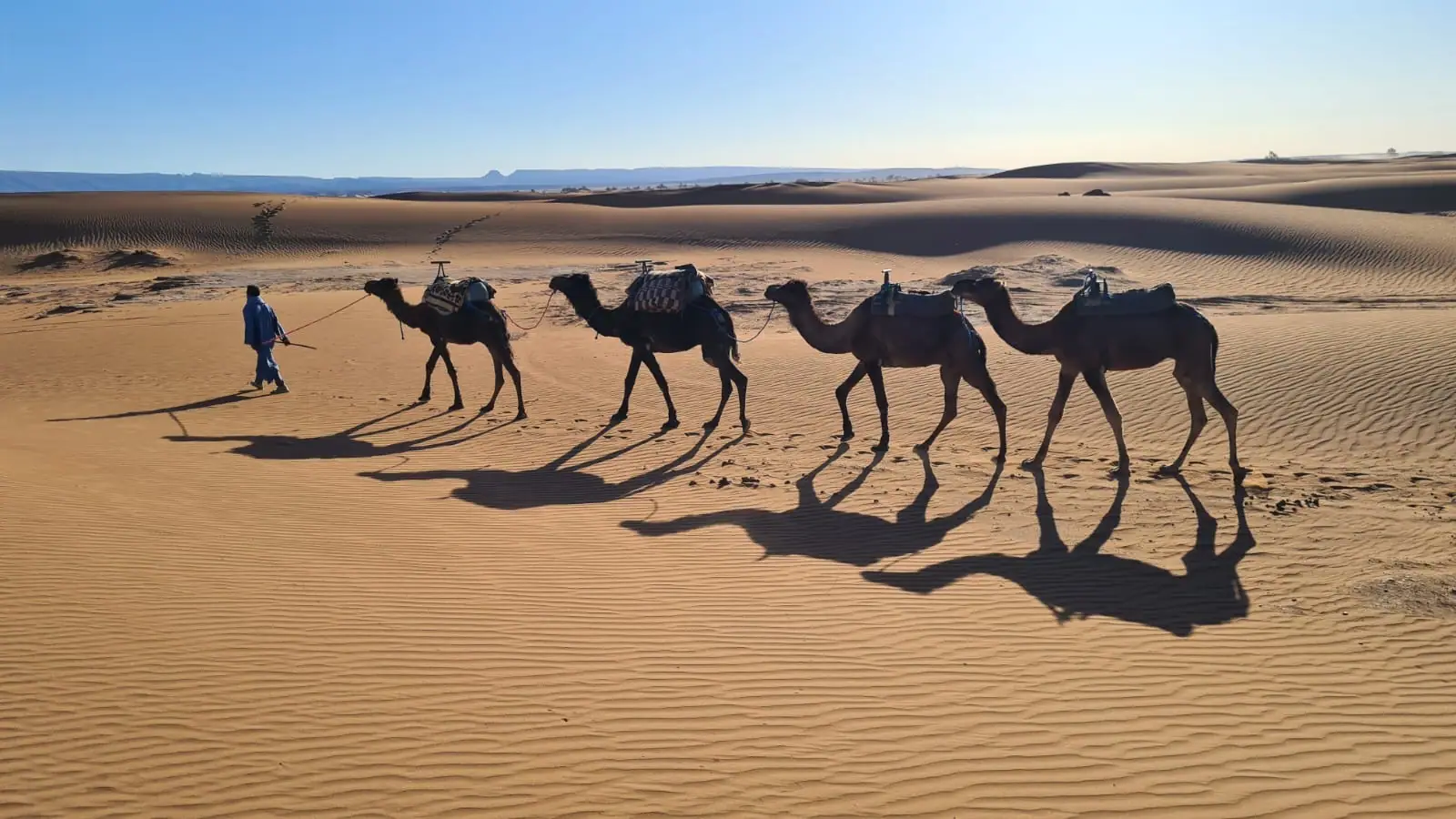
This is the camel trek that starts at the door. There is no long drive first: the camels are loaded in the Foum Zguid palm grove late in the morning and you walk out of town with them, heading south towards the long ridge of the Jebel Bani and then into the sand of Erg Lmhazil, also written El Mhazil. A cameleer leads the caravan, a cook travels with the mobile camp, and each night is spent in a different place.
Every traveller has a camel of their own, so you decide how much you walk and how much you ride. Most people cover the bulk of each stage on foot and climb into the saddle on flat stretches or when the legs ask for it late in the afternoon. Expect around four hours of walking on day one and five to six on day two, broken by a long rest through the hottest hours. Ordinary walking fitness is enough. It suits first-timers who want real camel trekking in Morocco without giving up a whole week; compare it with the other multi-day camel treks or read about the Erg Lmhazil dunes before you choose.
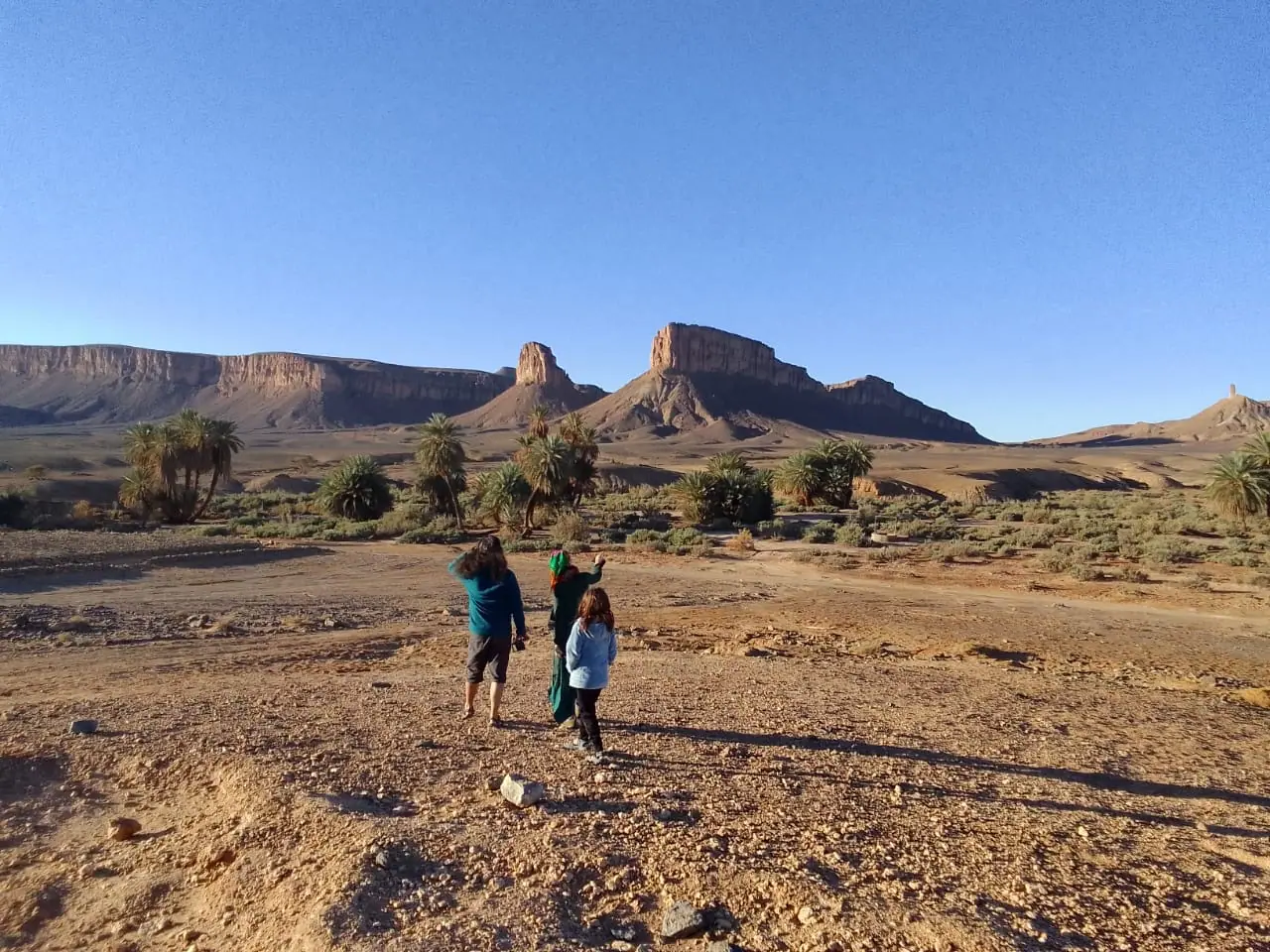
Late in the morning the team ties the bags and kitchen boxes onto the camels while you sort out your hat and water. Then it is south on foot through the palms and out onto open ground, roughly four hours in all. Lunch is taken in whatever shade the route offers. The first camp goes up beneath the Jebel Bani, and supper is cooked over the fire as the ridge turns dark.
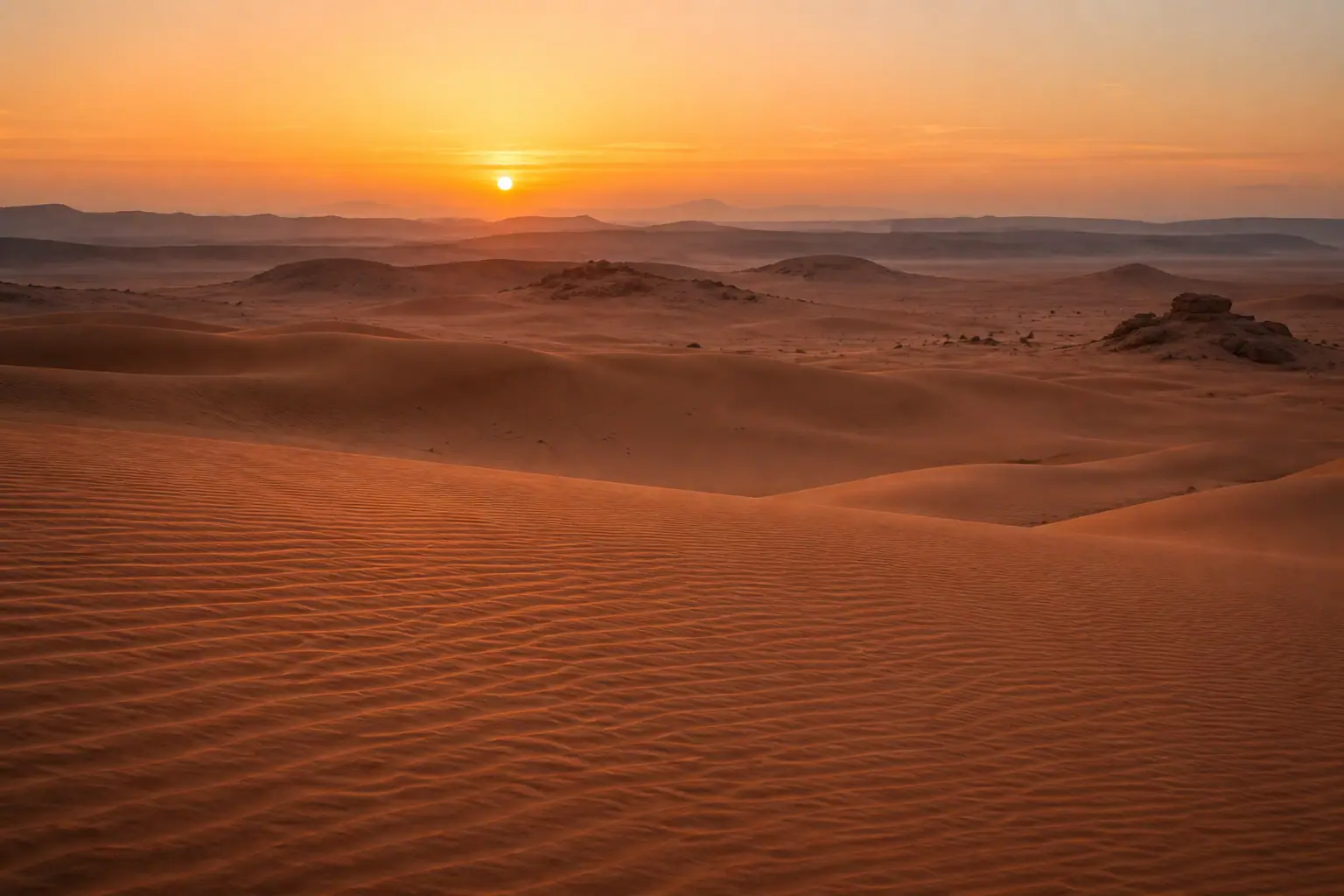
The longest day: five to six hours of walking, paced with regular pauses. The gravel and loose stones of the plain slowly turn to sand as you near Erg El Mhazil. Around midday the caravan halts for a long break out of the heat, and you set off again once it eases. By evening the camels kneel to be unloaded in the middle of the dunes, where the second camp is made.
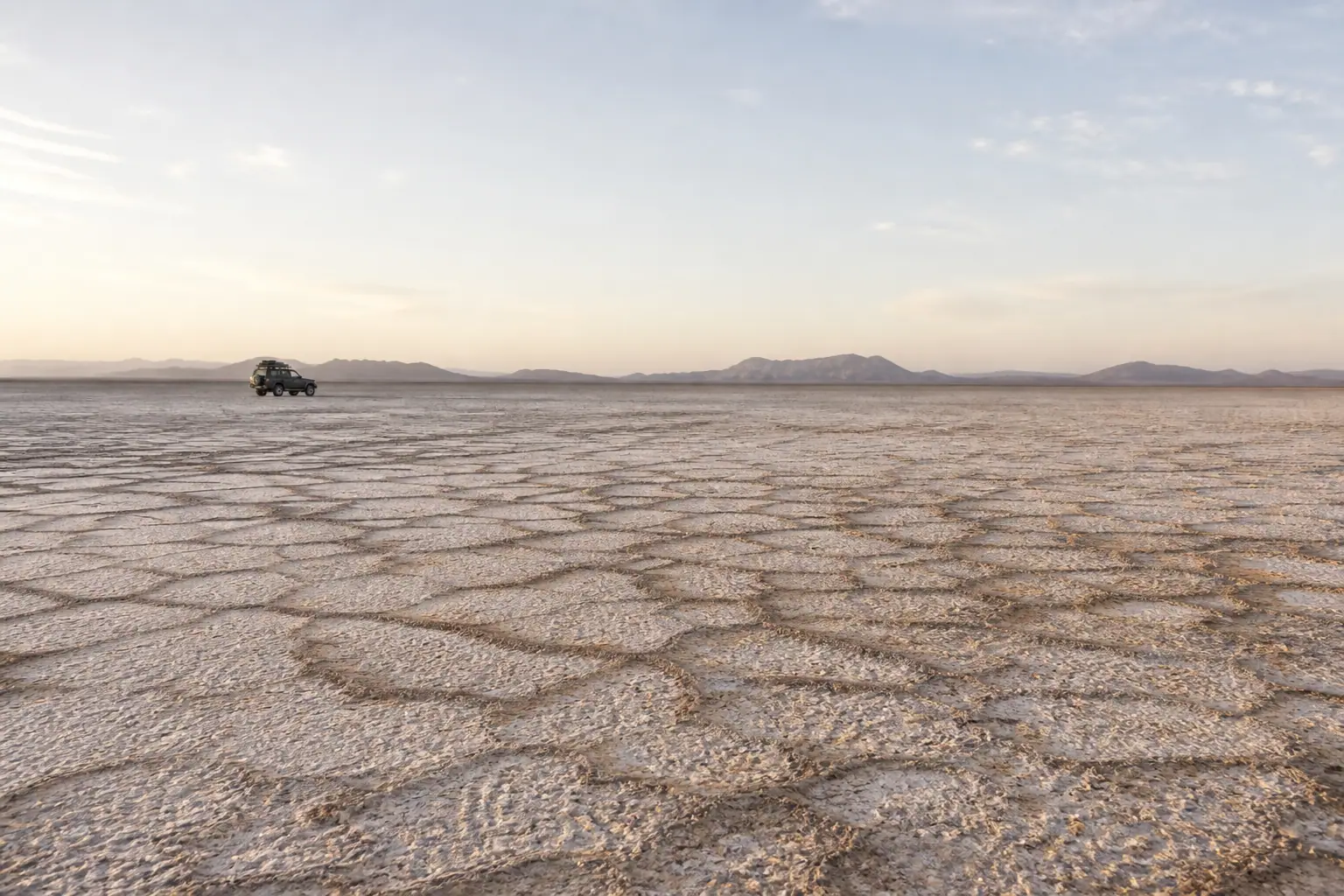
An early start makes the most of the cool hours. You walk out of the sand to the edge of Lake Iriki, the wide dry lake bed at the centre of the national park, and stop there for lunch. That is where the walking ends: a 4×4 collects the group and drives you back to Foum Zguid in about two hours.
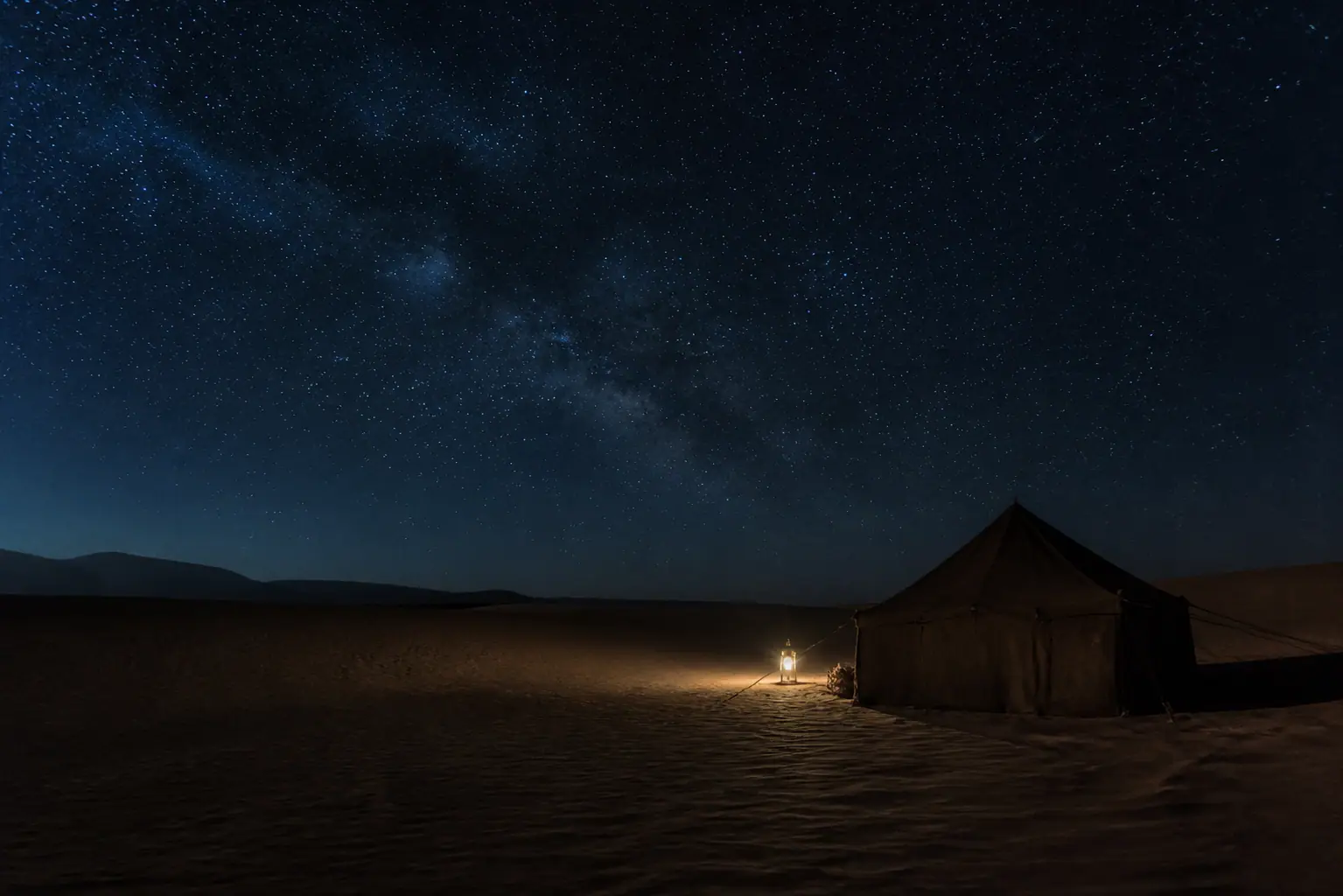
Both, in whatever proportion you like. Each person has a camel, but most travellers walk beside it for much of the stage and ride on the long flat sections or towards the end of the afternoon. If your legs tire on day two, the saddle is always there, so nobody is obliged to walk the whole way.
It is a walking trip rather than a mountain hike. Day one is about four hours, day two five to six, and day three a shorter morning stretch to Lake Iriki. The ground is mostly flat stony plain and soft sand, and the team stops for a long rest at midday. Anyone used to a few hours on foot will manage.
The trekking season runs from October to April, when days are warm rather than fierce. Summer heat in this part of the Sahara makes long walks unwise. Desert nights in December and January can fall close to freezing, so bring a warm layer even though blankets and sleeping bags are supplied.
Send your preferred dates and the number of walkers to WhatsApp +212 649 598 615. The programme and the price are confirmed with you before anything is booked. Every departure is private, so your group walks alone with its own caravan, cameleer and cook, for two people or up to eight.
Camel trekDunes, two camps and a respectful visit to a nomad school, with camels carrying the kit. From €250.
 Camel trek
Dunes, a nomad oasis and an earth-built guesthouse in Iriki National Park, four days from Foum Zguid.
Camel trekThree dune camps and a night under oasis palms, with transfers from Marrakech or Agadir included. From €640.
Write on WhatsApp with your dates, the number of travellers and the trip that tempts you. Nothing is booked until you agree.