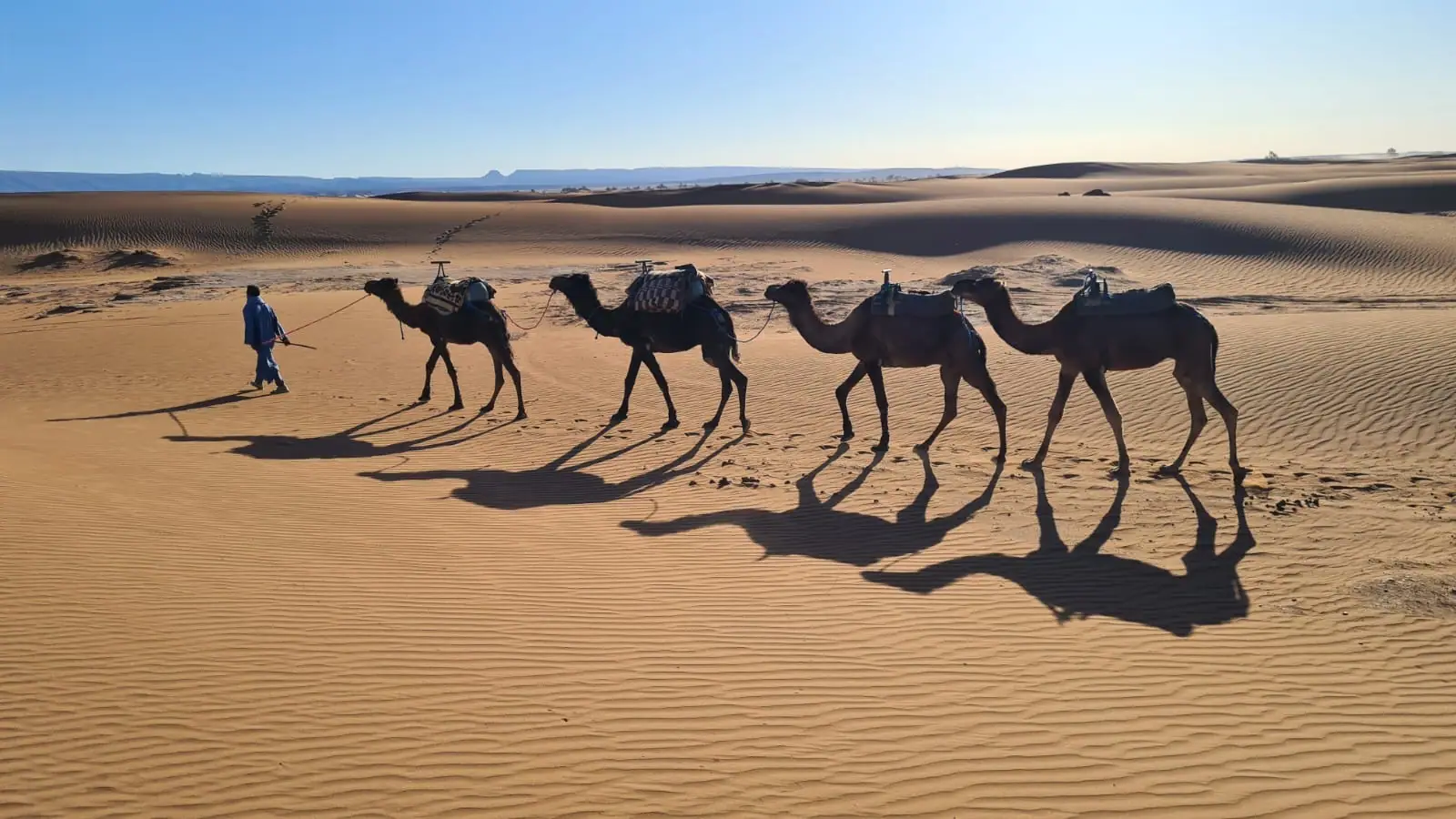
 Camel trek
3-day camel trek to Erg Lmhazil
The shortest true camel trek: palm grove, Jebel Bani, El Mhazil dunes and Lake Iriki in three days on foot.
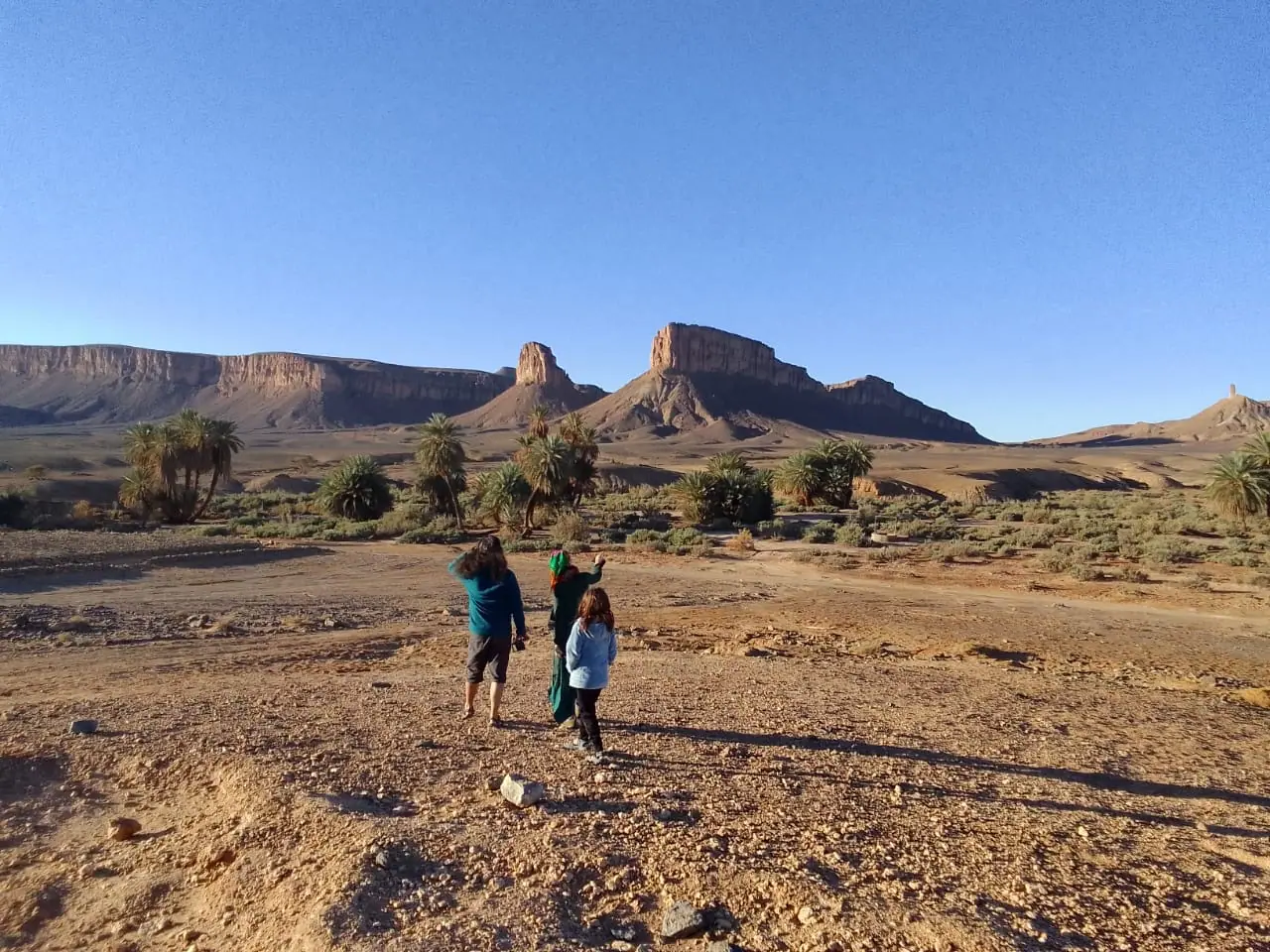
Practical camel trekking Morocco tips from the Foum Zguid desert: when to go, how many hours you will walk, what goes in your bag and how to get on with a camel.
In short
The best time for camel trekking in southern Morocco is October to April; summer heat often passes 40 °C. Regular walking fitness is enough for the 3-day trek (about 4 to 6 hours a day), while 5- to 7-day treks need more stamina. Pack sturdy shoes, sun protection, a warm layer for cold nights and, on most treks, your own sleeping bag.
The most useful decision comes before any packing: choose a trek that matches your time and your legs. Here is what each published programme says about walking time and bedding:
| Trek | Days | Walking, per programme | Sleeping bag | From |
|---|---|---|---|---|
| Erg El Mhazil caravan | 3 | About 4 h, then 5–6 h, then a short early walk | Provided | €230 |
| Nomad school hike | 3 | About 4 h, then 2 h | Bring your own | €250 |
| Iriki National Park | 4 | Gentle stages over two days | Bring your own | €300 |
| Heart of the dunes | 5 | Roughly 5–6 h per walking day | Bring your own | €640 |
| Oasis to Erg Chigaga | 6 | About 3 h, then 2–3 h, then a walk to Erg El Ghoule | Bring your own | €640 |
| Agadir to Chigaga | 7 | Five walking days; hours depend on the group | Ask when booking | €740 |
New to trekking? Three days at Erg El Mhazil is a complete experience without overcommitting. With a week and some walking behind you, the routes to Erg Chigaga add oases and the biggest dunes in the country.
| Months | Conditions | For trekking |
|---|---|---|
| October–November | Heat easing, pleasant days | Good; the season opens |
| December–February | Mild days, cold nights that can approach freezing; snow possible on the Tichka pass | Good walking, but pack warm for camp |
| March–April | Warming days; wind and sandstorms can occur | Good; keep a scarf handy |
| May–September | Very hot, often above 40 °C in summer | Treks are not planned in the heat; some 4×4 circuits swap the dune night for an oasis in July and August |
If your dates are fixed, for example around school holidays, message early. Our overview of Sahara camel trekking in Morocco sets the treks against the wider desert.
Less than people fear, but more than for a camel ride. A useful benchmark: if you can walk four or five hours on a hilly day at home and feel fine the next morning, the three-day trek will suit you. Some points that make the effort easier or harder:
If you have a health condition or doubts about your knees, tell us when you book so the programme can be adjusted where possible.
Pack in a soft bag rather than a rigid suitcase: it has to be strapped to a camel. Keep a small daypack for what you need while walking.
A camel kneels for you to climb on. It lifts its back legs first, which tips you forward, so lean back and hold on until it is fully up; the cameleer will tell you when. Once up, the gait is a slow sway that takes a few minutes to get used to. Hold the saddle frame rather than the rope, and relax your hips.
Most walkers mix the two: on foot through the cool hours and on the rougher ground, in the saddle on long flat stretches or at the end of the day. An hour or two of riding at a time is plenty at first. Cameleers lead the animals on foot, and they know them well; follow their advice about approaching and feeding.
Shorter trips also include or offer a camel ride; see our page on a camel ride with a night at camp.
For costs, read the camel trekking price guide. For travel to the start, see our Foum Zguid page, and when you are ready, book your trek on WhatsApp.
Camel trekThe shortest true camel trek: palm grove, Jebel Bani, El Mhazil dunes and Lake Iriki in three days on foot.
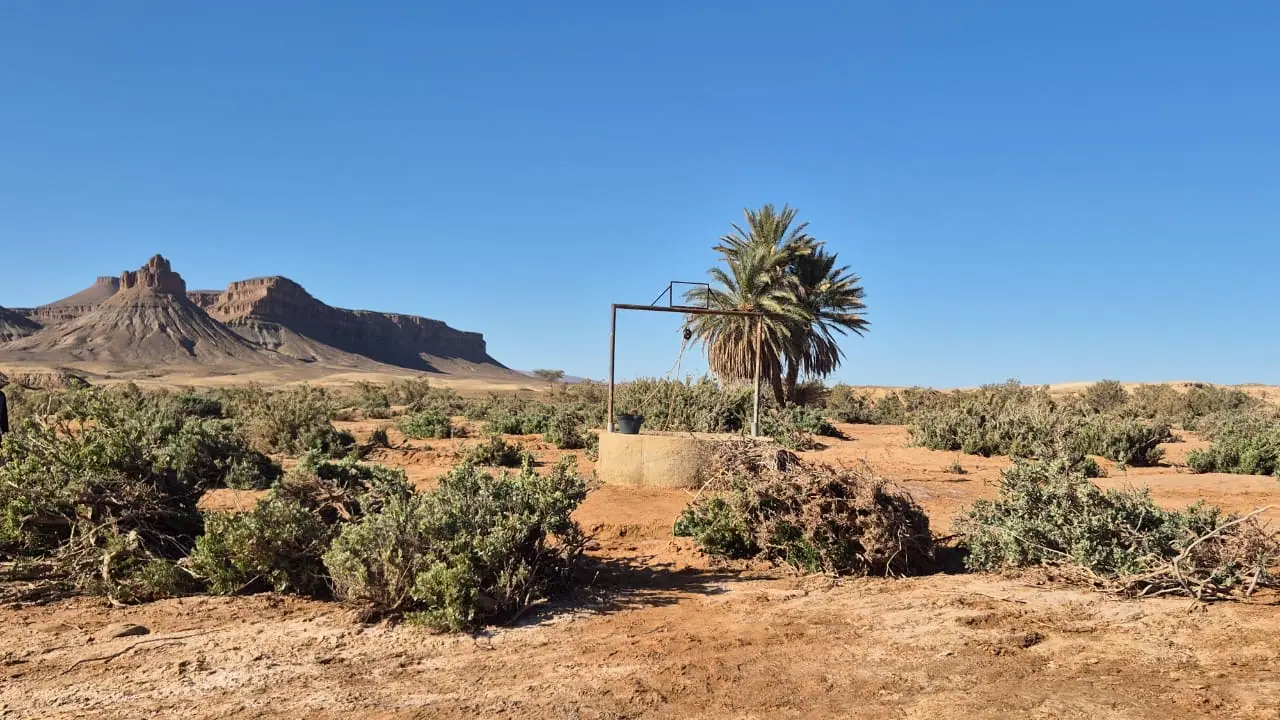 Camel trek
Dunes, two camps and a respectful visit to a nomad school, with camels carrying the kit. From €250.
Camel trekDunes, a nomad oasis and an earth-built guesthouse in Iriki National Park, four days from Foum Zguid.
Our treks run from October to April. Within that window, December to February bring mild days but cold nights near freezing, and spring can bring wind. From May to September the heat, often above 40 °C in summer, makes walking stages impractical.
Yes, if you are used to walking. The three-day Erg El Mhazil trek asks for about four hours on the first day and five to six on the second, with a long midday rest, and each traveller has a camel to ride when tired. Longer treks suit people with more walking experience.
Broken-in walking shoes or light boots with good grip. High sides or gaiters keep some sand out. Bring sandals or light trainers for camp. Avoid brand-new footwear: blisters can spoil a trek quickly.
In winter, nights at camp can fall close to freezing even after a warm day. Bring a fleece or down jacket, a hat and warm socks. On most treks you also bring your own sleeping bag; on the three-day El Mhazil trek sleeping bags and blankets are supplied.
Yes. Travel insurance is not included in any of our programmes, and you should have a policy that covers trekking in remote areas. Flights, personal expenses and tips are also outside the published price, so check each trip page for its own list.
Tips are not included in the published prices and are left to you. If you wish to tip, set aside an amount for the cameleer and the cook at the end of the trek. There is no fixed rate; give what feels right for the service you received.
Possibly, depending on their age and how much they enjoy walking. Tell us the ages when you write; we can say which programme fits and whether shorter stages or more riding time are realistic. A camp night with a camel ride is often the easier first step for younger children.
Write on WhatsApp with your dates, the number of travellers and the trip that tempts you. Nothing is booked until you agree.